
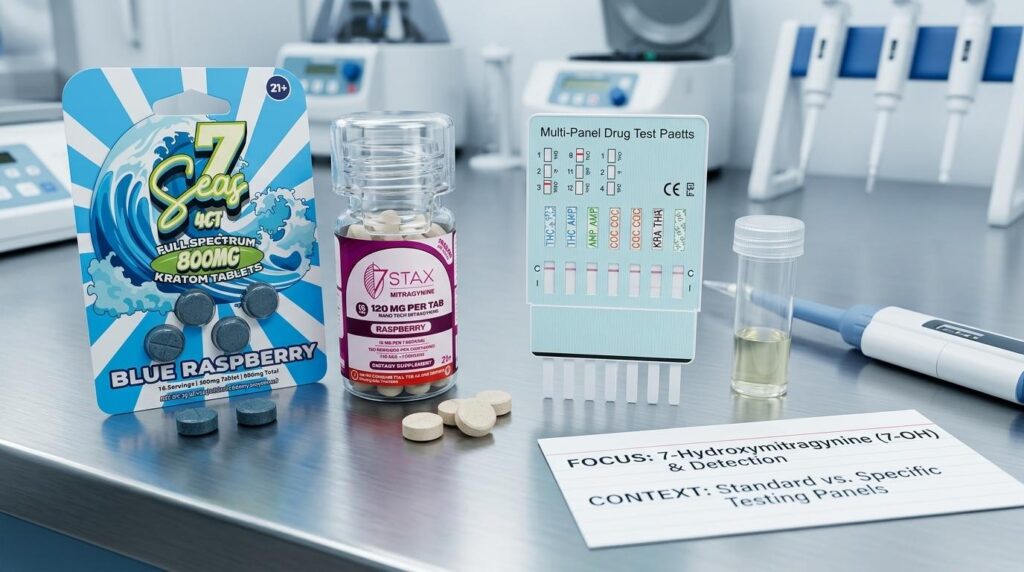
Drug testing is one of the most common questions 7-OH users ask, and the answers are not always straightforward. Standard workplace and pre-employment drug panels do not look for 7-hydroxymitragynine or other kratom alkaloids by default. But specialized kratom panels exist, hospital toxicology screens sometimes detect kratom compounds, and edge cases can produce surprising results on standard tests.
This guide walks through what current testing technology can and cannot detect, how long 7-OH stays detectable in the body, which tests pose actual risk, and how users with upcoming tests should think about their routine. The information here is based on current testing technology, not on guesses, and reflects how the industry has changed through 2026.
Standard Drug Panels and Kratom Alkaloids
The vast majority of workplace drug tests in the United States use the standard 5-panel or 10-panel urine screen. These panels look for amphetamines, cocaine, opiates, phencyclidine, marijuana, and sometimes barbiturates, benzodiazepines, methadone, and a few others. None of these standard panels test for 7-OH, mitragynine, or any other kratom alkaloid.
A user taking 7-OH regularly will pass a standard drug test without any special preparation as long as they have not taken any of the substances the panel actually screens for. This is the most important fact for most users to understand before worrying about kratom-related testing concerns.
When Specialized Kratom Tests Apply?
Some employers, treatment facilities, and probation programs use specialized kratom test panels that specifically look for mitragynine and 7-OH metabolites. These panels are less common but are growing in use, particularly in industries that have specifically added kratom to their prohibited substance lists. Healthcare workers, commercial drivers, and certain military positions are more likely to face specialized testing.
If your employer has explicitly told you that kratom is prohibited, assume they are using a panel that detects it. If kratom has never been mentioned in your workplace policies, the standard panels almost certainly used will not detect it regardless of your routine.
Detection Windows for 7-OH
7-hydroxymitragynine and its metabolites typically remain detectable in urine for between three and seven days after the last dose, depending on the dose size, frequency of use, body weight, and individual metabolism. For occasional users taking small servings, the detection window is at the shorter end of that range. For daily users at higher strengths, it extends toward the longer end.
Blood tests have a shorter detection window of one to three days. Hair follicle tests can detect kratom use for up to ninety days but are very rarely used in standard workplace screening. Saliva tests have a window similar to blood, usually one to three days for most users with regular kratom alkaloid use.
False Positives on Standard Panels
A small number of users have reported false positives for opiates on standard 5-panel and 10-panel urine tests after taking kratom or 7-OH. This happens because some kratom alkaloid metabolites can occasionally cross-react with the antibodies used in immunoassay-based opiate tests.
The false positive rate is low and not consistent across testing labs, but it can happen. If you receive a positive opiate result and have not taken opiates, request a confirmatory GC-MS or LC-MS test, which has much higher specificity and will not return false positive results from kratom alkaloid metabolites. Confirmatory tests are standard in any properly run testing program. Shop top-rated 7OH tablets.
How to Prepare for an Upcoming Test?
If you have a drug test coming up and know which type it is, your preparation depends on the specifics. For standard 5 or 10-panel tests, no special preparation is needed since these do not look for kratom alkaloids. For specialized kratom panels, stopping 7-OH use seven to ten days before the test gives most users enough time to clear detectable metabolites from urine.
For blood tests, three days is usually sufficient. Hair follicle tests are much harder to clear since the detection window extends to ninety days. If you have a hair test scheduled and have used 7-OH within that window, no realistic preparation will remove detectable traces in time.
Hydration and Testing
Drinking large amounts of water before a urine test can dilute the sample, but most modern testing labs check for dilution markers like creatinine levels and specific gravity. A diluted sample is treated as a failed test in many testing protocols. Do not rely on water loading or commercial detox products to pass a specialized kratom panel.
The detox products sold for this purpose are largely ineffective against kratom alkaloid testing specifically, since they were designed for different substances. Time is the only reliable way to clear detectable metabolites, and starting your preparation period far enough in advance is the only realistic strategy for users facing specialized panels.
Practical Recommendations for Users
For users in industries that do not test for kratom, no special precautions are needed. Take 7-OH as part of your normal routine and ignore the testing question entirely. For users in industries that may add kratom to their prohibited substance lists in the future, monitor your employer policies and be prepared to adjust your routine if testing changes.
For users facing scheduled specialized kratom tests, stop 7-OH use at least seven to ten days before the test and use that time to confirm you can manage without it. Some users transition to legal alternatives during this window. The right strategy depends on your specific situation, your testing schedule, and your industry.
Final Thoughts on Testing and 7-OH
The relationship between 7-OH and drug testing is more nuanced than online forums sometimes suggest. Most users in most industries face no testing risk whatsoever from kratom alkaloid use, because standard panels simply do not detect these compounds. Users in industries with specialized testing need to plan ahead but can manage their schedules with reasonable preparation.
False positives are rare but possible, and confirmatory testing resolves them in nearly all cases. Make decisions based on your specific situation rather than worst case generalizations. The most important step is understanding which type of test your employer or program actually uses, since the answer changes everything about how concerned you need to be.
Frequently Asked Questions
1. Will 7-OH show up on a standard drug test?
No. Standard 5-panel and 10-panel urine tests do not screen for kratom alkaloids including 7-OH.
2. How long does 7-OH stay in urine?
For most users, between three and seven days after the last dose. Daily users at higher strengths may take slightly longer to clear detectable metabolites.
3. Can I fail an opiate test from taking 7-OH?
False positives are rare but possible. Request a confirmatory GC-MS or LC-MS test if you receive an unexpected positive opiate result.
Page